| Article at a Glance This guide covers how to identify which possum species is in your roof, what Victorian wildlife law actually says about removal and the fines for getting it wrong, a detailed damage escalation timeline showing what one week versus six months in your roof space costs you, common entry points by property type, and a full comparison of the one-way door method versus DIY trapping. Two contextual links reference specialist same-day possum removal in St Kilda East for Melbourne’s inner south readers. |
That Thumping in the Ceiling at Night
It usually starts the same way. Something large moves across the ceiling just after dusk. You hear it stop, shuffle, move again. It is heavy and deliberate — nothing like the skittering of a rat or the occasional scrape of a bird on the roof. It happens the following night, and the night after that.
At some point, a smell develops. Not immediately, but steadily. A faint ammonia note that seems to come from nowhere and goes nowhere.
For tens of thousands of Melbourne homeowners every year, that combination — heavy nocturnal thumping plus a developing ceiling odour — means one thing: a brushtail possum has moved into the roof space.
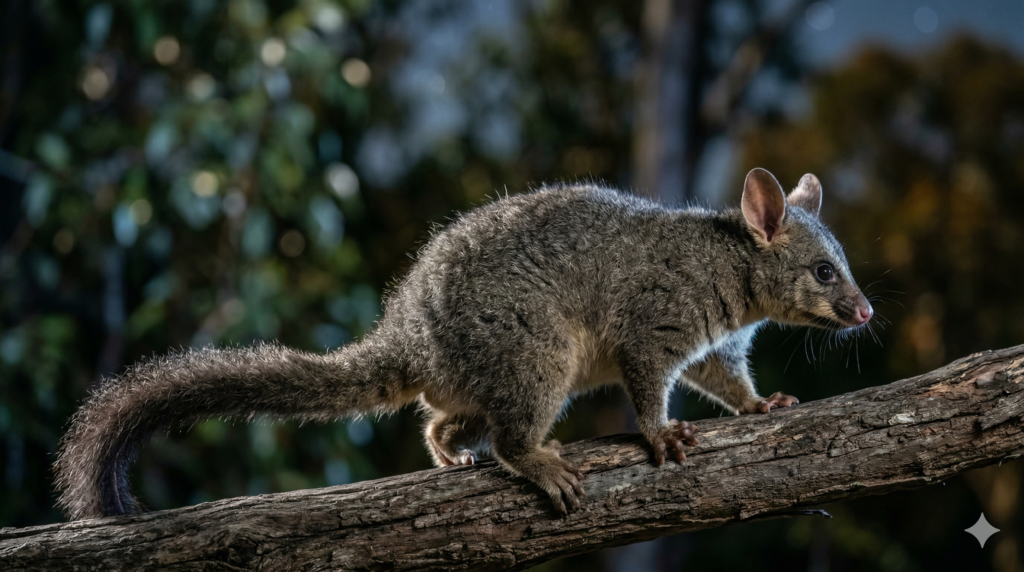
Possums are native, protected, and very common across Melbourne’s inner and middle suburbs. They are also, when they take up residence in your roof, a genuine problem that compounds quickly. This guide covers everything you need to know: what species you are likely dealing with, what the law says, how much damage a possum causes and how fast, and what a proper removal and exclusion looks like.
Which Possum Is in Your Roof? Species, Behaviour and What It Means
Melbourne is home to two common possum species: the Common Brushtail Possum (Trichosurus vulpecula) and the Common Ringtail Possum (Pseudocheirus peregrinus). They behave very differently and the law treats them differently. Getting the identification right matters before anything else happens.
The Common Brushtail Possum
Brushtails are the ones that end up in roofs. They are roughly cat-sized, averaging two to five kilograms, with grey fur, large pointed ears and a thick, bushy black tail. They are strongly territorial, sleeping in a single den during the day and foraging at night. When natural tree hollows are unavailable — which is common in dense inner suburbs like St Kilda East, Prahran and South Yarra where old hollow-bearing trees have been cleared — a warm, dark roof space is an almost perfect substitute.
Brushtail activity in a roof is unmistakable. The thumping is heavy and clear, most intense in the first two hours after dark and again just before dawn. They move deliberately across the entire roof space rather than staying in one corner. If it sounds like a small human is walking across your ceiling, it is almost certainly a brushtail possum.
The Common Ringtail Possum
Ringtails are significantly smaller — around half the size of a cat — with round ears, a grey back, rusty-coloured sides, and a distinctive curled tail with a white tip. Ringtails rarely enter roof spaces. They typically build dreys: round nests of twigs and leaves in dense garden vegetation two to four metres off the ground. If a ringtail ends up inside a structure it is usually by accident through an open window or an unusual gap, and it will generally find its own way out.
The legal implications of this difference are significant and covered in detail below.
Infographic 1: Brushtail vs Ringtail Possum — Key Differences for Homeowners
Table 1 — Species comparison covering behaviour, roof access patterns, and Victorian legal framework for each
| Feature | Brushtail Possum | Ringtail Possum | Why It Matters for Removal |
| Size | Cat-sized (~2–5 kg) | Half a cat (~0.7–1.5 kg) | Brushtails make louder thumping; ringtails quieter |
| Roof entry? | Very common | Rare – prefers dreys outdoors | Most roof callouts = brushtail |
| Noise pattern | Heavy thumping after dark | Light scurrying, occasional | Brushtail noise is unmistakable |
| Activity peak | Dusk to ~2 am | Throughout night | Problems most noticeable first two hours after dark |
| Trapping rules | Can trap inside building (licensed) | Cannot trap without permit | Species ID matters before any action |
| Release law (Vic) | Within 50 m of capture site | N/A – trapping restricted | Relocation > 50 m is illegal and inhumane |
Why Melbourne’s Inner South and East Has a Particularly High Possum Density
Suburbs such as St Kilda East, Elsternwick, Caulfield, Prahran, Windsor and Richmond consistently generate some of the highest possum removal call volumes in metropolitan Melbourne. This is not coincidental — it reflects a specific combination of urban geography and housing stock.
Wildlife Corridors Through the Inner South
The Elwood Canal Reserve, Albert Park Lake, Fawkner Park, the Royal Botanic Gardens corridor and the Port Phillip Bay foreshore greenways form an interconnected network of habitat that runs directly through Melbourne’s inner south. Possums move along these corridors continuously, dispersing younger animals from established territories into adjacent residential streets.
In St Kilda East specifically, the suburb sits between the Elwood Canal to the south and Albert Park to the west — two active wildlife movement zones that deposit possums into Westbury Street, Leopold Street, and the surrounding residential grid on a nightly basis.
Mature Street Tree Canopy as a Launch Pad
Melbourne’s inner south and east suburbs were planted extensively with large London plane trees, English elms, Moreton Bay figs and local eucalypts in the early twentieth century. These trees are now mature, with canopies that overhang rooflines at two-storey height throughout many streets. For a brushtail possum, a branch that extends within a metre of a roofline is effectively a bridge from the tree to the roof. Trimming overhanging branches is consistently one of the most effective long-term prevention measures.
Older Housing Stock and Deteriorated Eaves
St Kilda East’s dominant housing profile — Californian bungalows and Edwardian homes from the 1920s and 1930s — was built with terracotta tiles, original timber eave linings and lead flashing. After ninety to one hundred years of Melbourne weather, the eave linings crack and sag, the mortar around ridge capping deteriorates, and the timber fascia boards warp and split. These are not catastrophic failures — the house still looks perfectly fine from the street — but they create gaps of three to eight centimetres at the roofline that a brushtail possum, which can squeeze through an opening the size of a tennis ball, finds and exploits with ease.
The Real Cost of Waiting: Possum Damage Escalates Quickly
The single most common mistake Melbourne homeowners make with a roof possum is treating it as a nuisance to tolerate rather than a problem to resolve promptly. The noise is irritating, but it is the invisible, ongoing damage to the roof space that costs money — and that damage compounds every week the possum remains.
What a Possum Actually Does to a Roof Space
Insulation is the first casualty. A brushtail possum sleeps on insulation batts during the day and moves across them every night. The compression effect alone reduces R-value measurably within weeks — the insulation flattens, loses its air pockets and becomes far less effective at retaining heat in winter and deflecting heat in summer. Energy bills creep up as a consequence, though most homeowners do not connect the dots until well after the fact.
The possum also urinates and defecates in a specific area of the roof space — its established toilet zone. Possum urine is highly acidic. It soaks into fibreglass batts, wicks into timber joists and eventually penetrates ceiling plaster, producing the yellow-brown ceiling stains and ammonia odour that become apparent in the room below. Once insulation has been consistently soiled, cleaning is rarely practical. Replacement is the only effective solution.
Beyond insulation, possums chew. Electrical wiring, plastic conduit, timber roofing members and roof sarking are all documented targets. Chewed wiring is the most serious consequence — it is a genuine fire risk, not a theoretical one, and it requires a licensed electrician to assess and rectify before the roof space is considered safe.
Infographic 2: Possum Damage Escalation Timeline — What Each Additional Month Costs
Table 2 — Damage and approximate cost outcomes based on duration of possum occupation in Melbourne roof spaces (*costs are indicative estimates based on industry data; actual costs vary by property size and extent of damage)
| Duration in Roof | Insulation Impact | Structural Risk | Approx. Repair Cost* |
| < 1 week | Minimal compression | None | $0–$100 (entry seal only) |
| 1–4 weeks | Localised compression, urine staining begins | Nil–minor tile displacement | $200–$500 |
| 1–3 months | Significant R-value loss, urine soaked section | Timber staining, possible mould | $500–$1,500 |
| 3–6 months | Batts pulled apart for nesting; widespread soiling | Wiring chew risk emerges | $1,000–$3,000+ |
| 6+ months | Insulation replacement likely needed | Ceiling stain, structural moisture, fire risk from wiring | $3,000–$5,000+ |
The data in Table 2 makes the cost calculus clear. The removal and entry-point sealing service is the same whether you call on day three or month six — but the consequential damage in the roof space differs by an order of magnitude. Acting within the first week of noticing activity is genuinely the lowest-cost outcome.
Victorian Wildlife Law: What You Can and Cannot Do
This is the area where homeowners most commonly get into trouble. Possums are protected under the Wildlife Act 1975 (Victoria). The instinctive response — catch the possum and drive it to a park or bushland reserve — is both illegal and, as research shows, almost always fatal for the animal.
The 50-Metre Rule and Why It Exists
A Deakin University study of relocated brushtail possums in Melbourne found that the majority of animals released at a distance from their home territory died in stressful circumstances. Relocated possums spent significantly more time on the ground than resident animals — exposed, disorientated, and immediately in conflict with established possums in the new territory. The 50-metre rule under the Wildlife Act exists precisely because of this research: a possum released within its own established territory has a reasonable chance of re-establishing. One released in an unfamiliar area has very little.
This means that even a correctly conducted removal leaves the possum in your local area. It will remain in the neighbourhood. What prevents it from re-entering the roof is not the removal — it is the sealing of the entry point.
| Legal Warning: Possum Relocation Fines in Victoria Breaches of the Wildlife Act 1975 carry penalties of up to $9,246 for individuals. Cruelty offences under the Prevention of Cruelty to Animals Regulation 2016 carry fines up to $44,380 and/or 2 years imprisonment. These are not obscure technicalities — they are actively enforced and pest operators who breach them risk loss of licence. |
Infographic 3: Victorian Possum Law at a Glance — What Is and Is Not Legal
Table 3 — Summary of Victorian Wildlife Act 1975 requirements for possum trapping and release (Sources: Wildlife Victoria, Whitehorse City Council, DELWP guidance)
| Action | Legal Status (Victoria) | Consequence if Breached |
| Trap brushtail in your own roof | Legal for homeowner or licensed controller | N/A if done correctly |
| Trap ringtail possum | Illegal without permit | Fine under Wildlife Act 1975 |
| Release possum > 50 metres away | Illegal | Up to $9,246 (Wildlife Act 1975) |
| Harm or kill a possum | Illegal under any circumstances | Up to $9,246 + possible 2 years imprisonment |
| Release before sunset (same day) | Must wait until after sunset | Animal welfare breach – fine under POCR 2016 |
| Use inhumane trap | Illegal – trap must not injure animal | Animal cruelty charge |
What About the Ringtail?
Ringtail possums cannot be trapped by homeowners under any circumstances without a permit. If you suspect a ringtail (the animal is significantly smaller and more delicate than a brushtail), contact a licensed wildlife controller before taking any action. Attempting to trap a ringtail without the correct authorisation is an offence regardless of where the animal is found.
Where Possums Get In: Entry Points by Property Type
Understanding how a possum entered the roof space is the most important step in ensuring it does not return. In Melbourne’s inner suburbs, the entry point is almost never a large, obvious hole. It is almost always a small, gradual deterioration — a cracked eave lining, a gap where a fascia board has pulled away from a rafter end, a lifted tile near the eave edge — that has been present for years but only recently found by a possum.
The entry point also determines what the permanent fix looks like. There is no single solution that works across all property types.
Infographic 4: Possum Entry Points by Melbourne Property Type — Common Locations and Permanent Fixes
Table 4 — Entry point patterns and repair approaches by housing type across Melbourne’s inner south and east suburbs
| Property Type | Most Likely Entry Point | Access Route | Permanent Fix |
| Californian bungalow / Edwardian (1920s–30s) | Cracked/lifted eave lining | Overhanging tree branch | Re-bed tiles, replace eave section, trim branch |
| Victorian terrace (pre-1920) | Fascia board gaps, mortar decay at chimney | Adjacent trees or aerial cable | Steel mesh + fascia repair |
| Brick veneer (1960s–80s) | Damaged ridge capping or eave vents | Roof-to-garage transition gap | Re-point ridge, fit mesh vent covers |
| Apartment / townhouse | Roof penetrations, skylight surrounds, AC gaps | Adjacent balcony or tree | Seal penetrations, fit mesh collars |
| Weatherboard cottage | Open subfloor, split weatherboard near eave | Ground-level shrubs or timber stacks | Mesh subfloor, replace split boards |
The Role of Trees
Overhanging branches deserve special mention because they are consistently underestimated as a contributing factor. Sealing an entry point while leaving a branch that delivers the possum directly to the roofline creates a situation where the possum simply finds the next gap. In suburbs like St Kilda East with established large canopy trees — London planes, Moreton Bay figs, mature jacarandas — a professional possum removal should always include a conversation about which branches overhang the roofline and whether they need trimming.
Trimming does not need to be aggressive or harm the tree. Removing just the terminal metres of a branch that currently touches or overhangs the roof by less than a metre is sufficient to remove the direct access route. An arborist and a pest technician working in sequence is the most effective approach for properties with large established trees.
The One-Way Door Method vs. Trapping: How Professional Removal Actually Works
There are two approaches used by licensed possum removal operators in Melbourne, and understanding the difference helps homeowners know what they are paying for and why.
The One-Way Door (Exclusion Device)
This is the standard professional approach for brushtail possums occupying a roof space with a clear primary entry point. A purpose-built one-way door is fitted over the entry point. The possum exits to forage after dark and cannot re-enter. Once the operator has confirmed the possum has left — typically checked after one night — the device is removed and the entry point is permanently sealed.
The advantage of this method is that it is non-stressful for the animal, requires no handling, is legal without a specific trap permit, and ensures the possum exits the roof space naturally. The disadvantage is that it takes at least one night’s cycle to complete, which means properties with a very urgent problem (structural damage, wiring chew risk) may be better served by direct trapping.
Live Trapping
A licensed operator may use a live trap — a purpose-built cage trap that contains the animal without injury — in situations where the one-way door is not feasible, or where the possum needs to be confirmed removed quickly. All of the legal requirements described above apply: the trap must be checked no later than two hours after sunrise, the animal must be kept sheltered and undisturbed until after sunset, and it must be released within 50 metres of the capture site.
Live trapping requires a Wildlife Act authorisation and should not be attempted by unlicensed homeowners, not because it is technically difficult but because the legal exposure for getting any part of the process wrong is substantial.
What a Complete Job Looks Like
Removal and sealing. Not just one of these. The most common reason for a repeat possum problem — and the most common reason a homeowner ends up calling a second operator after a failed first attempt — is that the removal was done without a complete perimeter check and sealing of all potential entry points. A possum removed from a roof with three gaps in the eave lining will simply re-enter through the second or third gap within days.
A complete professional job involves: inspecting the full roof perimeter, not just the obvious primary entry point; installing the exclusion device or trap; confirming exit; sealing the primary entry point with appropriate materials (steel mesh, re-bedded tiles, replaced eave lining section); checking and sealing all secondary gaps; and advising on any overhanging branches that need trimming. For homeowners in Melbourne’s inner south needing this full-service approach, possum removal in St Kilda East from a local licensed operator covers inspection, exclusion, and complete entry-point sealing on a single same-day visit.
After the Possum Has Gone: What to Check in the Roof Space
Once the possum is excluded and entry points are sealed, the work in the roof space is not necessarily finished. Depending on how long the possum occupied the space, there may be residual issues that need attention.
Insulation Assessment
Compressed insulation that has not been soiled is typically worth leaving in place unless the R-value has dropped significantly. An energy assessor or insulation installer can advise based on the current condition. Insulation that has been consistently urinated on should be replaced — not just for odour reasons but because wet, contaminated insulation provides almost no thermal resistance and creates a moisture reservoir that promotes mould growth in the roof space.
Odour Treatment
Even after the possum and its damaged insulation are gone, the timber and plaster surfaces in the roof space may retain odour compounds from the urine. An enzyme-based odour neutraliser applied to affected timber and plaster will break down the compounds that household cleaning products cannot touch. Without this step, the odour can persist for weeks in warm weather as the roof space heats up.
Electrical Inspection
If the possum was in the roof space for more than a month, a visual check of accessible wiring is worthwhile. Any wiring with visible gnaw damage to the outer sheath should be assessed by a licensed electrician before the roof space is declared safe. This is not optional — chewed electrical insulation in a roof space is the same fire risk as chewed wiring anywhere else in the house, and it is invisible from below.
Roof Tile and Timber Check
The entry point repair addresses the gap the possum used. But a possum that has been in the roof space for several months has moved around and may have dislodged tiles, disturbed sarking, or damaged ridge capping elsewhere. A brief visual check of the roof surface — accessible from ladder height — after the possum is excluded is a reasonable precaution before the next heavy rain.
Long-Term Prevention: Keeping Possums Out Permanently
The most effective long-term possum prevention strategy involves three elements working together: a structurally sound roofline, no direct tree access, and an alternative habitat option for the local possum population.
Roof Maintenance as Pest Prevention
In Melbourne’s inner suburbs, routine roof maintenance is the most undervalued form of possum prevention. A re-bedding and re-pointing of ridge and hip cappings, replacement of cracked eave lining sections, and re-flashing of deteriorated lead valleys addresses the gaps that possums exploit before they find them. For St Kilda East’s Californian bungalows and Edwardian homes, a professional roof inspection every five to seven years is a reasonable maintenance interval for properties with no current possum activity.
Branch Management
Any branch that touches or hangs within a metre of the roofline is a possum access point. For properties on tree-lined streets, this means checking the roofline after major canopy growth each spring and arranging trimming where necessary. Council trees in Melbourne are managed by the relevant council and a permit may be required for trimming work — check with the local council before any work on street trees.
Possum Nest Boxes
This is the most counterintuitive prevention measure and also genuinely effective. Providing an alternative den site — a purpose-built possum nest box installed on a large tree in the garden at the correct height — gives the local possum population somewhere warm and sheltered to live that is not your roof. Wildlife Victoria and local council wildlife programs sometimes provide nest boxes or installation guidance. It does not guarantee zero possum activity at the roofline, but it reduces the urgency of a possum seeking a den site by giving it a viable alternative.
Frequently Asked Questions
How do I know for certain it is a possum and not a large rat?
The single most reliable differentiator is weight and deliberateness. A brushtail possum sounds like a small person moving across your ceiling — heavy, slow footsteps that you can track from one end of the roof to the other. Rats and mice are faster, lighter and more erratic, often heard in bursts of scurrying rather than measured footsteps. If it sounds large, moves purposefully, and is most active in the first couple of hours after full dark, it is almost certainly a brushtail possum.
Can I just put down a repellent to drive the possum out?
DIY repellents — including peppermint oil, ammonia-soaked rags, and ultrasonic devices — are widely promoted but have a very limited practical effect on an established brushtail possum. A possum that has been using a roof space as its den for weeks is not going to abandon a comfortable, warm space because of an odour nearby. These products may work as a short-term deterrent to prevent initial entry, but they are not a removal method.
We had a possum removed last year and now there is another one. Why?
Almost always because the entry point was not fully sealed, or because only the primary entry point was closed while secondary gaps remained open. The possum in your roof now may be the same animal that was removed (which, as discussed above, was released within 50 metres of your property), or a different possum from the local population that found the remaining gap. The fix is the same either way: a complete perimeter check and sealing of every gap at the roofline.
My possum has been in the roof for months. There is a very strong smell. What should I check first?
In that situation, assess three things in order: first, is the possum still in the roof or has it moved on? (No thumping for a week or more, combined with a very strong ammonia smell, may mean it has died in the roof space, in which case the priority is dead animal removal before odour treatment.) Second, is there visible ceiling staining? Staining means the urine has penetrated the insulation and is wicking into plaster — the insulation directly above the stain will likely need replacing. Third, are there any visible cracks or changes in the ceiling? These can indicate moisture damage from possum urine sitting in the roof space for extended periods. A licensed operator carrying out possum removal in St Kilda East or surrounds will assess all three during the inspection and advise on what follow-up is needed.
Is a possum in the roof a problem for neighbours too?
In attached or semi-detached homes — which are common across St Kilda East and the inner south generally — it can be. Brushtail possums use the full roof space and in a terrace or semi-detached property where the roof void is continuous across the party wall (more common than most homeowners realise in older construction), a possum entering from your side can move into the neighbouring roof space. If your neighbour is hearing noise but cannot find an entry point, it is worth checking whether the roof void is continuous.
The Bottom Line: Act Early, Seal Completely
A brushtail possum in your roof is not an emergency in the sense that a gas leak or electrical fault is. But it is a problem that gets materially more expensive and disruptive for every week it goes unaddressed. The noise is the symptom. The insulation compression, the urine damage, the ceiling staining, the wiring risk — those are the actual costs that accumulate invisibly in the roof space while you wait.
Victorian wildlife law makes DIY removal a legal minefield, and the 50-metre release rule means that removal alone — without complete entry-point sealing — is almost always followed by a repeat incident. The effective answer is licensed removal combined with a thorough perimeter check and permanent sealing of every gap at the roofline, ideally followed by trimming any branches that currently give the possum direct roof access.
The earlier this is done, the lower the total cost. The first week after noticing activity is always the cheapest week to act.