If you have moved into one of Cranbourne’s new estates and started hearing scratching above the ceiling at night, you are not unlucky and your builder did not do anything unusual. Rats and mice arrive in new suburbs for a predictable reason, at a predictable time of year, through a short list of gaps. Knowing those three things is most of the battle.
What this guide covers
- Why brand new homes on the edge of Cranbourne attract rodents in their first few years
- The three rodents you are most likely hearing, and how to tell them apart
- The six gaps rats and mice actually use to get into a modern house
- What to do in the first week, and the mistakes that make it worse
- When it is time to bring in a licensed technician
Why new estates get rats in their first few years
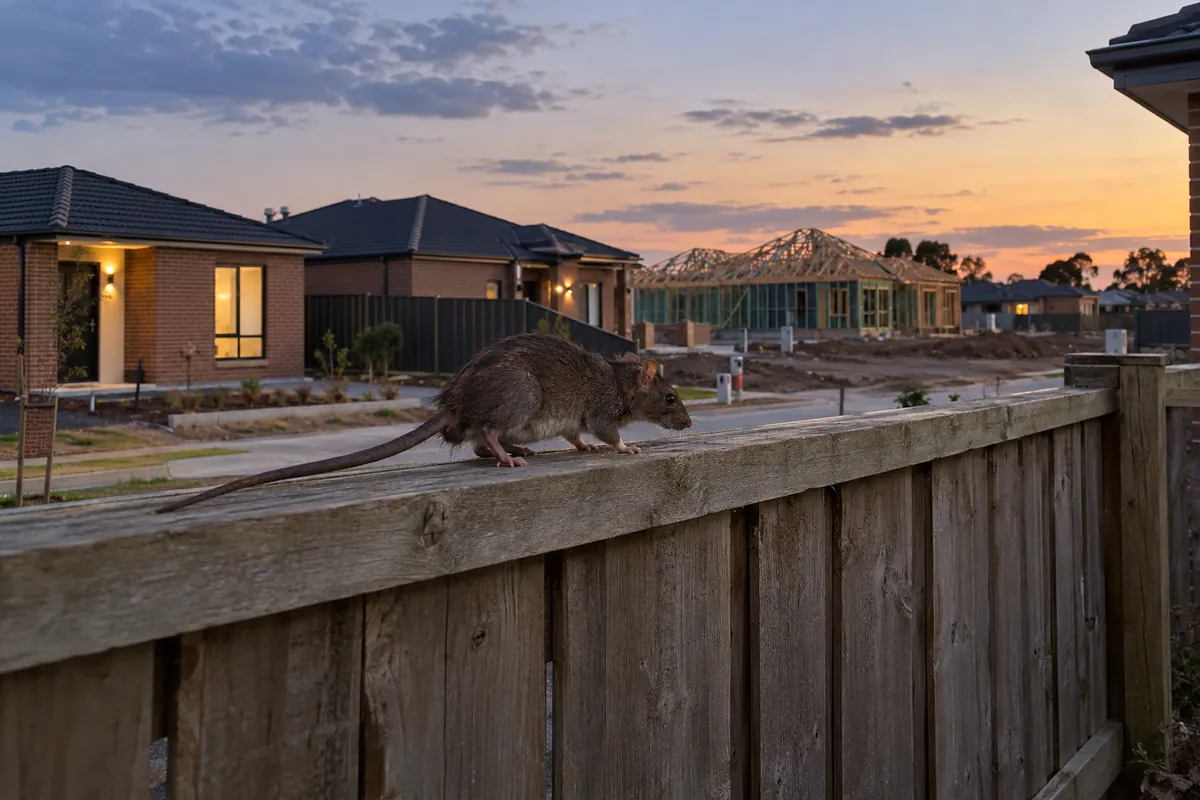
Cranbourne has grown faster than almost anywhere in Melbourne. Cranbourne East, North and West were paddocks not long ago, and every stage of an estate starts with the same thing: earthmoving equipment clearing grass, scrub and old fence lines. The mice and rats that lived in that ground do not disappear. They move to the nearest shelter, and the nearest shelter is usually the row of finished homes beside the works.
That is why the first homes on a street often have rodent trouble while the street is still being built, and why it settles down once the surrounding blocks are finished and the open ground is gone. It also explains why the problem can come back when the next stage of the estate starts clearing.
The timing is just as predictable. Rodents live outdoors through summer, then push indoors when the nights get cold. In Melbourne that means calls about rats in the roof climb from late March, peak through winter, and ease off again in spring.
Which rodent are you hearing?
Most Cranbourne homes deal with one of three animals, and the right fix depends on which one it is.
Roof rat (black rat)
A slim climber with a tail longer than its body. It runs along fences, trees and cables and is the usual cause of scratching in the ceiling.
Brown rat (Norway rat)
Heavier and a digger. It lives at ground level, under sheds, slabs, decks and woodpiles, and around drains.
House mouse
Small, fast and able to breed every few weeks. It shows up in pantries, cupboards and wall cavities, often in larger numbers than you would expect.
Droppings are the quickest way to tell them apart. Mouse droppings are tiny, about the size of a grain of rice. Rat droppings are two or three times longer and noticeably thicker. Light, quick scratching that runs all night is rodents. Heavy thumping at dusk and dawn is more likely a possum, which is a different job entirely.
How rats get into a modern house
People are often surprised that a brand new home can have rats at all. New houses are tighter than old ones, but every house still has holes made for services, and they are not always sealed properly once the trades have finished.
| Entry point | Why it happens | How it is fixed |
|---|---|---|
| Air conditioning and solar penetrations | Holes cut for pipes and cables after the house is built | Sealed with mesh and a suitable filler |
| Garage door seals | Gaps at the bottom and sides of roller and panel doors | New seal or brush strip |
| Weep holes | Deliberate gaps in brickwork lead into the wall cavity | Fitted with weep hole covers that still let moisture out |
| Eaves and fascia | Small gaps where the roof meets the wall, often above a fence | Sealed with mesh or flashing |
| Meter boxes and service pits | Openings where cables and pipes enter the slab | Sealed inside the box or pit |
| Doors left open | Mice walk in on warm evenings | Screen doors and a habit change |
What to do in the first week
Start outside. Walk around the house and look for the gaps in the table above, especially around the air conditioning unit and the meter box. Look along the base of the fence and behind the shed for burrows and runs, which show up as smooth, worn tracks in the grass or soil.
Then take away what is feeding them. Pet food left out overnight, bird seed, fallen fruit, open compost and bins with lids that do not close are all reliable food sources. In Cranbourne, horse feed and chook food are a big one on larger blocks, so keep it in metal bins with tight lids.
Finally, cut the bridges. Trim any tree or climber that lets a roof rat step onto the roof, and do not stack timber or stored items against the house wall.
Sweeping or vacuuming dry droppings stirs up dust that can carry disease. Wear disposable gloves, dampen the droppings with disinfectant first, then wipe them up and bin them.
Baiting without harming pets or wildlife
Supermarket baits and snap traps will catch a few rodents, but on their own they rarely end the problem, because they do nothing about the gap the next rat will use. Loose bait thrown into a roof is also a risk to pets and to owls and other wildlife that eat poisoned rodents.
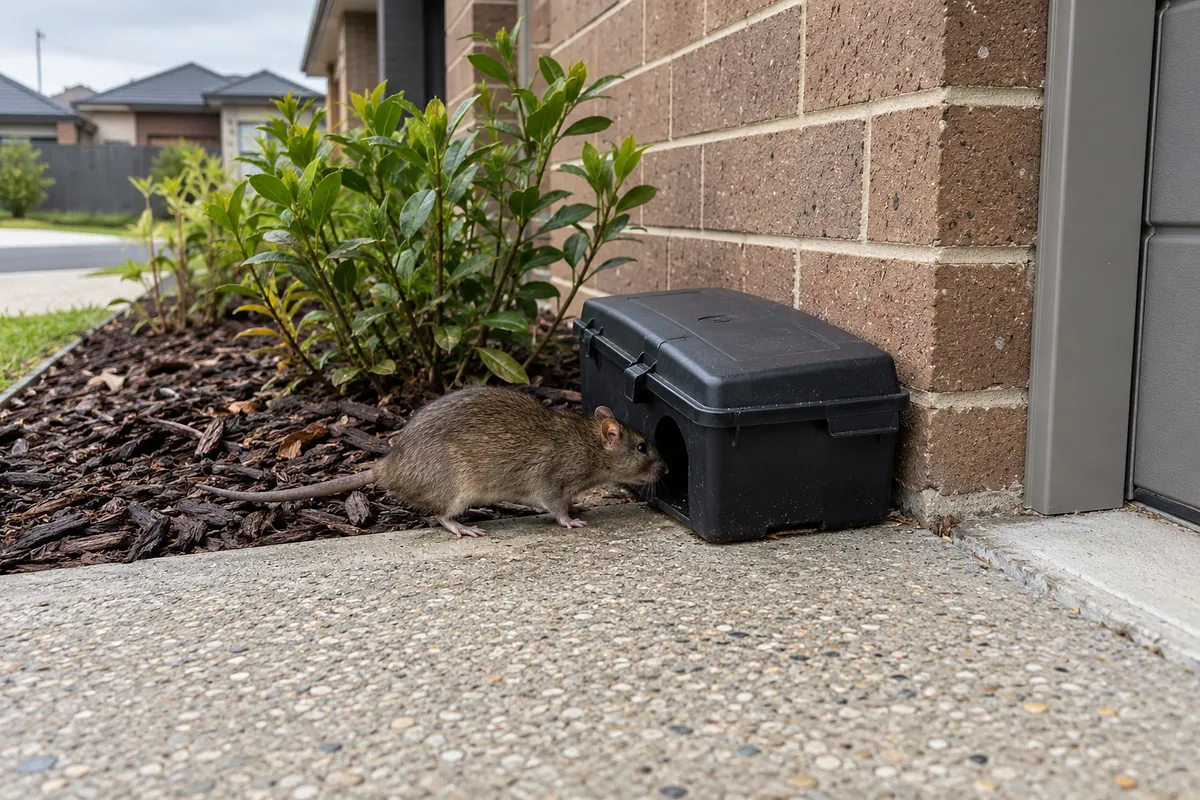
If you use bait, use lockable, tamper resistant stations placed along the runs, against walls and out of reach of children and pets, and follow the label exactly. Collect any dead rodents you find so other animals cannot eat them.
When to call a licensed technician
Call a professional if the noise keeps coming back after two or three weeks, if you find chewed cables in the roof, if there is a smell that suggests a rodent has died inside a wall, or if your neighbours are hearing the same thing. On blocks this close together, the problem is often shared along the fence line.
A good service will do three things together: inspect the roof, garage and yard to find the runs and the gaps, reduce the rodents with lockable stations, and seal the entry points so the next ones cannot follow. Local operators such as Swift Pest Control, which offers rodent control in Cranbourne and the surrounding City of Casey suburbs, work this way and quote a fixed price before they come out.
For more on what is involved, our mice control guide covers the mouse side of the problem in detail.
Frequently asked questions
Why does my brand new house have rats?
Building new estates clears the ground that rats and mice were living in, and the nearest homes become their new shelter. Unsealed gaps around pipes, cables and garage doors let them in.
Will the rats go away once the estate is finished?
The pressure usually eases once the surrounding open ground is built on, but rodents already living in your roof will stay unless they are removed and the gaps are sealed.
Is the scratching in my ceiling a rat or a possum?
Light, quick scratching through the night is usually rats or mice. Heavy thumps around dusk and dawn, sometimes with hissing, is more likely a possum.
Are rats more common in autumn?
Yes. Rodents move indoors as the nights get colder, so calls in Melbourne rise from late March and peak through winter.
Can I just block the hole they use?
Not while they are still inside. Blocking an active entry can trap rodents in the roof or walls, where they may die and cause a smell. Reduce the activity first, then seal.
- Google Keyword Planner, Australia, 12 months to August 2026: average monthly searches for rodent control in Cranbourne.
- Rodent biology and entry gap sizes: standard pest management references for Rattus rattus, Rattus norvegicus and Mus musculus.
- This guide is general information, not a substitute for an on site inspection.