A beach house on the Mornington Peninsula can sit quiet for weeks at a time, and to a brushtail possum a quiet, dry roof is about the best home there is. Plenty of owners only find out when they arrive for summer to a smell, a stained ceiling and thumping overhead. Here is how to spot it early, what the law allows, and how to make the roof possum proof while you are away.
In this guide
- Why Peninsula holiday homes are a favourite with brushtail possums
- The signs to check for every time you open up the house
- What Victorian law allows, and why relocating a possum is not an option
- How a possum is moved out properly without being handled
- A pre summer checklist for homes that sit empty
Why holiday homes attract possums
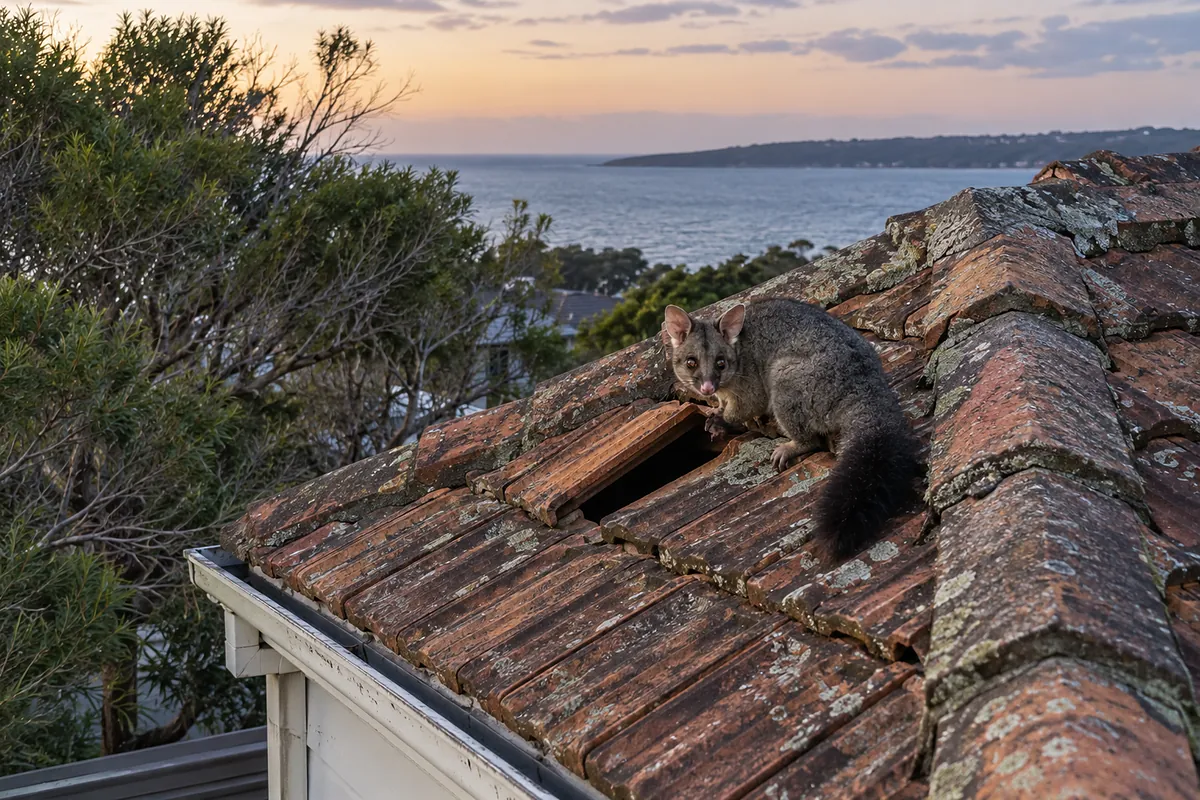
Brushtail possums live in tree hollows, and the Peninsula has plenty of big old trees, coastal tea tree and moonah right beside the houses. A roof is simply a better hollow: warm, dry and safe from foxes. In a house that is lived in, the noise, lights and people often push a possum on. In a house that is empty from autumn to Christmas, nothing does.
Coastal weather helps it in. Salt air and strong winds off Port Phillip Bay are hard on roofs. Ridge capping cracks, terracotta tiles slip and metal flashing corrodes faster than it does inland. Each of those leaves a gap, and a possum only needs a gap about the size of a large orange.
Signs to check when you open up the house
| What you notice | What it usually means |
|---|---|
| A sharp, musky smell | Possum urine soaking into insulation, often strongest in warm weather |
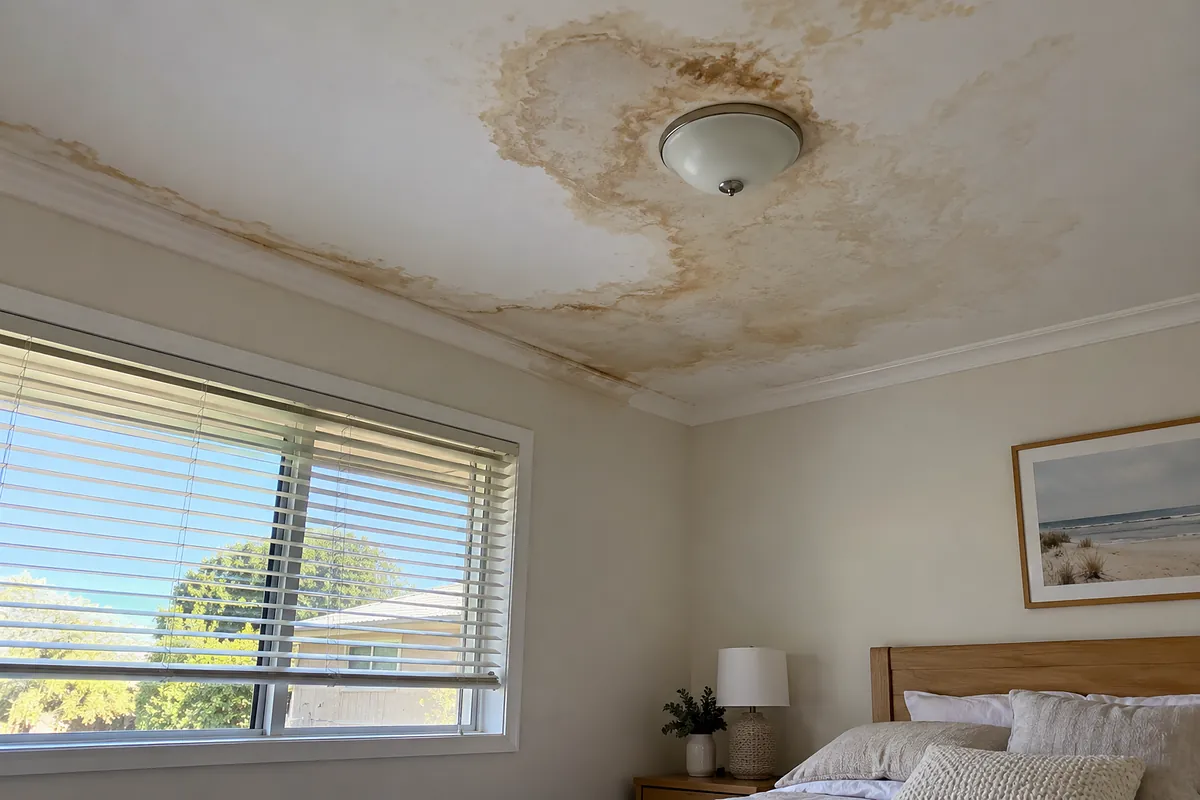
| Brown or yellow stains on the ceiling | Urine coming through the plaster, often near a light fitting or cornice |
| Thumping and running at dusk and dawn | A possum leaving to feed and coming home |
| Droppings on the deck or path | Larger than a rat’s, collecting under the entry point |
| Scratch marks on a post or gutter | The route it climbs every night |
| Flattened or scattered insulation | The nest and the runs, seen from the roof hatch |
If you see two or more of these, there is almost certainly a possum in the roof. It is worth acting before the summer heat makes the smell and the staining worse. Our guide to possums in your roof explains the noises and signs in more detail.
What Victorian law allows
Possums are protected wildlife under the Wildlife Act 1975. A common brushtail possum living in a building may be trapped, but it must be released on the same property, within 50 metres of where it was caught, after sunset on the same day. Taking it to the bush or a national park is not legal, and a possum released in strange territory usually does not survive anyway.
Ringtail possums are treated differently: they cannot be trapped without an Authority to Control Wildlife, which is held by the landholder. In practice ringtails rarely live in roofs. They build round nests in dense shrubs and hedges.
Any operator who offers to catch your possum and release it somewhere else is offering something the law does not allow. The lawful approach keeps the possum on your property and keeps it out of the roof.
How a possum is moved out properly
The method that works, and the one a licensed technician will use, is about the roof rather than the possum. Every gap into the roof is found and sealed except the main one. A one way door goes over that last gap. The possum goes out to feed after dark, as it does every night, and the door stops it getting back in. Once the roof is confirmed empty, the last gap is sealed.
Two details matter on the Peninsula. First, the timing: if a young possum is still in the roof and too small to leave on its own, the final seal has to wait. Second, the materials: mesh and fixings near the coast should be chosen to stand up to salt air, or the gap simply reopens a year later.
A nest box mounted in a tree on your block is worth considering too. The possum keeps its territory, and it has somewhere to go that is not your ceiling.
Dealing with the smell and the stains
Once the possum is out and the roof is sealed, the smell usually fades over a few weeks as the roof space airs out, faster in a house that is opened up and ventilated. Badly soaked insulation directly under the nest may need to be removed and replaced, because it holds the smell long after the possum has gone.
Ceiling stains are a separate job. Once the plaster is dry, a stain blocking sealer followed by ceiling paint covers most of them. If the plaster has gone soft or is sagging, it needs a plasterer to look at it. Either way, fix the possum first. There is no point repainting a ceiling while a possum is still living above it.
Getting it done while you are away
Many Peninsula owners live in Melbourne and only come down on weekends, so it helps to use someone who can work around that. A local service can arrange access with you or a neighbour, send photos of the entry points and the finished work, and time the final seal for when the possum has gone. Swift Pest Control, for example, handles possum removal in Mornington and the surrounding towns this way, with a fixed price agreed before they travel.
If cost is the worry, our possum removal cost guide explains what drives the price, which comes down to the roof far more than the possum.
A pre summer checklist for empty homes
Walk the roof line
From the ground, look for slipped tiles, cracked capping and gaps where the roof meets the gutter or a wall.
Check the ceilings
Look for new stains, especially in bedrooms and near light fittings.
Trim the bridges
Cut branches back at least a metre from the roof and keep climbers off downpipes.
Ask a neighbour
Someone who lives there all year will hear a possum long before you do.
Frequently asked questions
Can I trap the possum myself?
Only a brushtail living in a building, and only if it is released on the same property, within 50 metres, after sunset the same day. The roof stays open, so the possum usually walks straight back in.
Will the possum leave on its own?
Rarely. A roof in an empty house is too good a home to give up, and once a possum has settled in it will keep coming back.
Do I have to be at the house for the work?
No. Access can be arranged with you or a neighbour, and photos can be sent of what was found and sealed.
Why do coastal roofs let possums in so easily?
Salt air and wind loosen tiles and capping and corrode flashing and fixings, and each of those becomes a gap.
Can a possum be taken to the bush?
No. Relocation is not legal in Victoria. The possum stays on your property, out of the roof.
- Wildlife Act 1975 (Vic): trapping of brushtail possums in buildings, same property release within 50 metres after sunset; Authority to Control Wildlife for other species.
- Google Keyword Planner, Australia, 12 months to August 2026: possum removal searches on the Mornington Peninsula.
- This guide is general information, not legal advice or a substitute for an inspection.